How to Sort a Small Collection Without Buying More
Sort a small collection without buying more by choosing one shared principle, arranging what you own, and spotting useful connections before adding anything.
How do you sort a small collection without buying more? Start by choosing one reason the objects belong together, then give them a temporary arrangement on a clear surface. Sorting this way can reveal a collection’s existing character before you spend money on another item or storage accessory.
What should you decide before sorting a small collection?
Choose one organizing principle for the session. A principle is the single quality you will use to group the objects. It might be material, place, memory, maker, color, or the way you acquired each piece. One rule keeps the exercise readable; several rules at once can turn a simple sort into a search for a perfect system.
Pick a principle that answers a question you genuinely have. If you want to understand how varied the collection is, sort by material. If you want to see which objects carry related stories, sort by memory or occasion. If you cannot decide, write two possible principles on scraps of paper and choose the one that makes you curious to look closer.
Set a modest boundary for the session: the collection, a clear table or floor area, and a place to return objects when you finish. Gather a pencil and paper for brief notes. You do not need matching trays, display stands, or extra containers; those can distract from seeing what is already there.
How do you arrange objects by one principle?
Bring together only the pieces that belong to the collection you chose. Place them where you can see them without stacking or crowding, and make a few loose groups according to the selected principle. If you are sorting by material, for instance, put wood, paper, glass, and metal objects near their respective groups. If an object combines materials, set it between groups for now rather than forcing a decision.
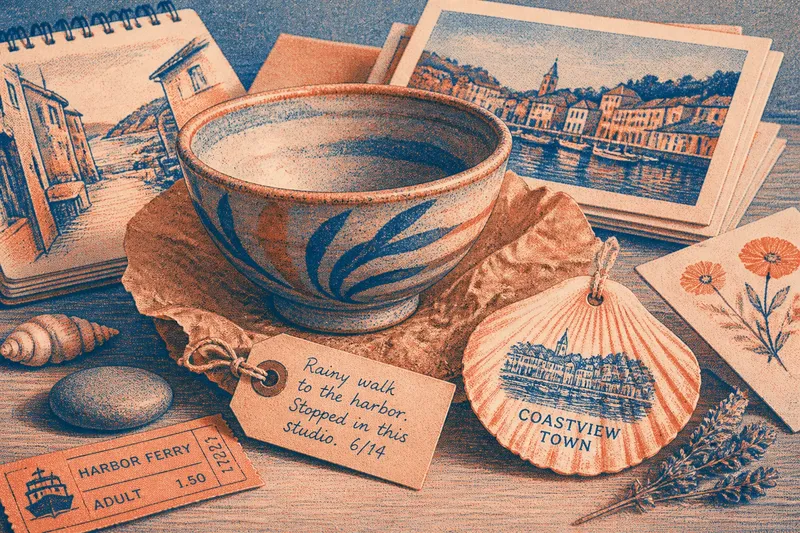
For a memory-based sort, use short, specific notes instead of trying to remember every detail at once. A note such as “bought during a rainy museum visit” is more useful than “special.” The aim is not to write a complete history; it is to make the connection visible enough to compare with other pieces.
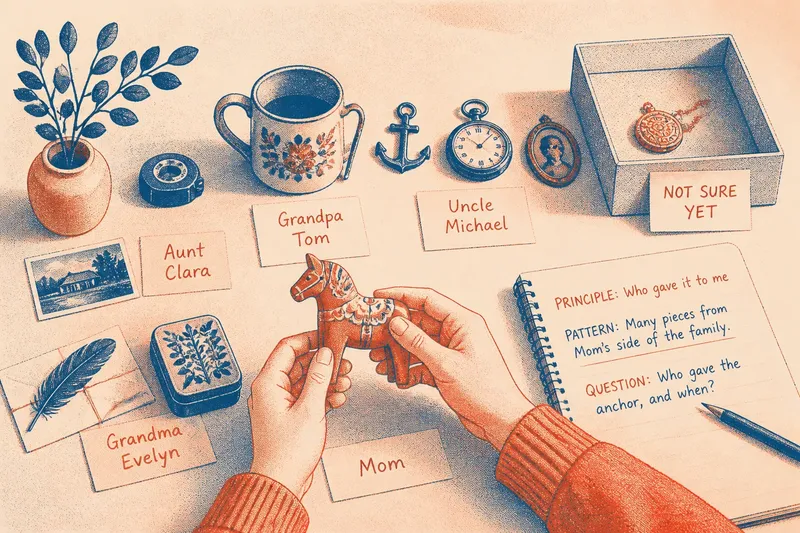
Say you own a handful of small keepsakes from family gatherings and have chosen “who gave it to me” as the principle. You set each object on a table and place a note beside it naming the giver, leaving one uncertain item aside. You may notice that several pieces connect to one branch of the family, while the uncertain object remains a clear question rather than being assigned a story you cannot support.
What should you do with objects that do not fit?
Keep uncertain pieces in a separate “not sure yet” area. This is a temporary group, not a verdict about whether an object belongs in the collection. A piece may not fit because its material is mixed, its story is incomplete, or the chosen principle simply does not illuminate it.
Notice the difference between an exception and a new organizing principle. If one object resists a material sort, that does not mean you need to reorganize everything by color or age. Make a short note about what is unclear, then continue with the rule you chose. The collection can have exceptions without becoming incoherent.
If an object seems unrelated, ask whether it belongs to this collection at all or merely lives in the same drawer. You can set it aside for a later decision without discarding it. Sorting is a way to see relationships, not an obligation to keep every object in the same group forever.
How can the arrangement show what the collection has in common?
Look across the groups for a pattern that was not obvious before. Several pieces may share a place, a source, a material, or a kind of memory even when they look different. Write down one observation in plain language, such as “most of these were gifts” or “the paper objects carry the clearest stories.” A small note can preserve the insight after you put everything away.
Then ask what the arrangement makes you want to know. You might want to identify an unknown material, recall who gave an object, or find out whether two pieces came from the same event. Record the question rather than treating it as a reason to shop. The useful outcome of a sorting session may be a clearer understanding, not a new acquisition.
Take a photo if the arrangement itself helps you remember the pattern. A phone picture is enough; there is no need to stage a polished display. Keep any notes with the collection or in a simple digital note so the connection does not depend on remembering the session later.
What questions come up while sorting a small collection?
Should I sort by color or material?
Choose color if you want to compare visual relationships, and material if you want to notice what the objects are made from. For a first session, use whichever principle makes you ask more specific questions about the pieces.
What if I do not know an object’s story?
Mark the story as unknown instead of guessing. You can still group the object by a visible quality, such as material or shape, while leaving its history unresolved.
Do I need to buy storage before I sort?
No; use a clear surface and temporary groupings first. Once you understand what needs to stay together, you can decide whether your existing drawer, box, or shelf already serves the collection.
How often should I repeat the exercise?
Repeat it when the collection changes or when the current arrangement no longer helps you see its connections. You do not need a fixed schedule; the point is to make the objects understandable to you.
How do you finish the session without turning it into a shopping trip?
Before putting everything away, write down the principle you used, one pattern you noticed, and any question you want to revisit. Return the objects to their usual place, using the containers or shelves already available. If a group is difficult to store together, make a note of the practical issue without immediately searching for a new organizer.
Keep the observation separate from a purchase decision. “I have several paper keepsakes with related stories” describes what you own; it does not mean you need to buy another paper item or a display frame. Sorting a small collection without buying more works best when the arrangement helps you recognize what is already present. Let that clearer view guide any later decision, including the decision to leave the collection as it is.