Rigid Box or Soft Pouch: Two Ways to Present a Small Gift
Compare a rigid box or soft pouch for a small gift, balancing protection, presentation, reuse, and storage space to choose packaging that fits the item.
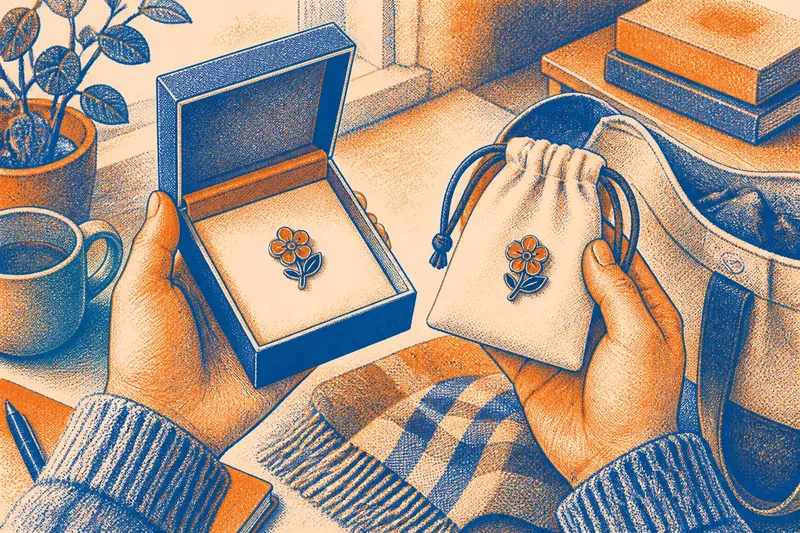
Choosing a rigid box or soft pouch for a small gift often comes down to what the recipient will do with the item after opening it. A box gives a small object a defined place and shields it from pressure; a pouch is easier to carry and tuck away. The right choice depends on the object, the journey it will make, and whether its packaging is likely to stay in use.
Imagine you are giving a delicate enamel pin to a friend who will take it home on a crowded train. You have a shallow rigid box and a small cotton pouch. Both can present the pin neatly, but they solve different problems. Following the decision from wrapping to storage shows what each option offers—and what it asks the recipient to keep.
What does the gift need protection from?
Start with the object rather than the packaging’s appearance. A rigid box has solid panels that resist being squeezed or bent. That structure can help protect a pin from pressure in a tote bag, especially when the box has a fitted insert that keeps the item from shifting. The box does not make the contents invulnerable, but it creates a buffer around them.
A soft pouch protects differently. Fabric can keep an object from rubbing directly against keys, coins, or other items, and a drawstring or flap can help keep it contained. But cloth generally gives little resistance to crushing. A pendant in a pouch may be protected from scratches while still being pressed against the side of a bag.
For the enamel pin, the box has an advantage during the ride home because the gift is more exposed to pressure than to scuffing. If the pin were instead a smooth, sturdy pendant, the pouch might be enough, particularly if the recipient plans to wear it soon. Think about the likely hazard—pressure, abrasion, loose parts, or simply getting lost—rather than treating one format as universally protective.
How does each option shape the opening?
A box makes the gift feel like a distinct object set apart from its surroundings. A lid, tray, or small insert directs attention to the contents and can keep them in a pleasing position. That presentation works well when the recipient will open the gift at a table or when the item is meant to be displayed. The structure also adds more material and takes a little effort to open and put away.
A pouch offers a softer, less formal reveal. The recipient can loosen a drawstring or lift a flap and remove the item without managing a separate lid. A fabric pouch can also double as a travel holder, so opening the gift is connected to a later use. Its presentation depends on its shape and finish: a cleanly sewn pouch can feel considered, while an oversized or loosely tied one may make a tiny gift seem lost inside.
In the pin scenario, a slim box with a simple paper insert would make the pin easy to see and keep its sharp backing from catching on fabric. But if the friend values quick access more than display, a pouch with a secure closure could feel more natural. The packaging should suit the moment of giving without making the recipient work to access or handle the object.
Will the packaging earn a place after the gift is opened?
Reuse is not just a question of whether packaging can be used again. It depends on whether it fits a task the recipient already has. A pouch can hold jewelry, earbuds, or small travel items, provided the material and closure suit the contents. Because it can fold or flatten when empty, it may be easier to keep in a drawer or bag.
A rigid box can be useful for storing the gift itself, especially if the item is delicate or has small parts. It can also hold cards, pins, or other objects that benefit from a firm container. Yet an empty box has a fixed shape. If the recipient has no use for that size and shape, its sturdiness can become an inconvenience rather than a benefit.
For the enamel pin, ask whether the friend is likely to keep it on a jacket or store it with other accessories. If it will be stored, the box may continue to protect it. If the friend usually carries small accessories loose in a bag, a pouch could be the more useful second life. A gift’s packaging is more reusable when the recipient can imagine a specific use for it, not merely when it looks durable.
Which format takes up less room?
A pouch usually occupies little space when empty because it can be folded or rolled. That makes it convenient for a recipient with limited storage, and easy for the giver to carry before the exchange. Its contents still need enough room, however: a pouch that is too small can strain at the closure, while one that is too large may let an item move around.
A rigid box preserves its full shape whether it is holding the gift or not. It may stack neatly with other boxes, but it needs a clear place on a shelf or in a drawer. For someone who keeps packaging for future use, a box can be worth that space; for someone who prefers uncluttered storage, the empty container may be the first thing to discard.
In the invented pin situation, the friend lives in a small apartment and tends to store accessories in one drawer. A shallow box could work if it fits with the pin’s other keepsakes. If that drawer is already crowded, a pouch that folds flat may be easier to retain. The relevant space is not only the room available for the gift on the day it is given, but also the room the recipient is willing to reserve afterward.
What questions help choose a rigid box or soft pouch?
Which is better for a fragile small gift?
A rigid box is often the more suitable starting point when the item could bend, break, or be damaged by pressure. A fitted insert can limit movement, while a pouch mainly separates the object from surface scratches. Consider the specific item and how it will be carried.
Is a pouch enough for a small piece of jewelry?
For a sturdy piece that will be worn or carried soon, a pouch may provide useful separation from other belongings. Delicate chains, sharp findings, or easily scratched surfaces may need more secure containment, such as a small box or an inner wrap. The item’s construction matters more than its size alone.
Which package is easier to store?
An empty pouch can usually be folded away, while a rigid box keeps its shape and needs more dedicated room. If the packaging will store the gift, compare its footprint with the place the recipient already keeps similar items. Packaging that fits an existing storage habit is more likely to remain useful.
Can a rigid box or pouch be recycled?
That depends on the materials and the recycling options available locally. A box may combine paperboard, a plastic window, foam, or magnets; a pouch may use blended fabric, cords, or metal fittings. Check the package’s material information and local guidance rather than assuming that a particular format belongs in a recycling bin.
How does the choice resolve in the pin scenario?
For the crowded train ride, the shallow rigid box is the better initial choice because the enamel pin needs a firm barrier against pressure and a place for its backing. A simple insert keeps the pin visible without adding a complicated presentation. This decision is about the trip home, not a claim that boxes are always superior.
Before wrapping it, you notice that the friend often wears pins and has little storage space. That changes what counts as useful after the exchange. You could use the box for the journey and let the friend decide whether to keep it, or choose a compact pouch if its fabric and closure suit carrying the pin. In either case, avoid adding a bulky outer container that serves no purpose beyond making the package larger.
The practical lesson is to separate three questions: what might harm the gift, how the recipient will open it, and whether the empty packaging has a believable future use. The answers may point in different directions. A box can be best for protection while a pouch is better for carrying, so the choice is a balance rather than a contest.
When comparing a rigid box or soft pouch, picture the gift’s route from your hands to the place it will live. Choose the format that handles the most relevant risk and does not create needless storage work. If the recipient has a clear use for the packaging, that can settle a close decision; if not, a simple, well-sized package may be kinder than an elaborate one.