The Souvenir Before the Refrigerator Magnet
Learn how keepsakes shifted from found and handmade mementos to recognizable retail goods, and choose a souvenir that preserves the part of a visit you value.
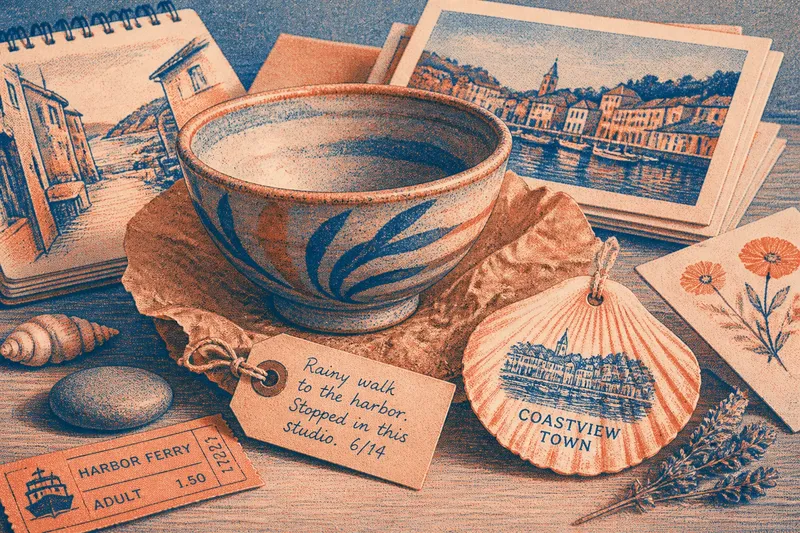
Before a refrigerator magnet could mark a trip with a printed landmark, a traveler might bring home a sketch, a pressed flower, or a small object bought from a maker. The story of the souvenir before the refrigerator magnet is not a simple march from handmade objects to factory goods. It is a useful contrast between keepsakes gathered from an individual encounter and keepsakes designed to identify a place at a glance.
What did travelers bring home before souvenirs became standardized?
There was no single object that came before the modern retail souvenir. A keepsake might be something found during a journey, something made by the traveler, a practical object bought locally, or a token acquired from a seller. Which objects people carried home depended on the trip, what was available, and what they chose to preserve.
A shell from a beach or a drawing of a street could be unique to one person’s visit. A small craft bought from a local maker might also serve an ordinary purpose at home. In each case, the object’s connection to the trip could rest on a detail its owner remembered, rather than a label that explained the place to anyone who saw it.
Such items are best understood as personal mementos, not as proof that earlier travelers never bought keepsakes. The distinction is about emphasis: a memento can point back to one encounter, while a souvenir designed for visitors often uses a recognizable image or name to identify a destination.
How did printed and repeatable souvenirs change the idea?
Printing made it possible to reproduce the same view, image, or place name across many objects. Postcards and other printed keepsakes could present a destination in a compact, recognizable form; badges and decorative tokens could do something similar through symbols and text. These examples illustrate a design shift, not a claim that every visitor followed the same historical path.
A repeatable product does not depend on the buyer having met a particular maker or witnessed a specific moment. Its landmark, local emblem, or place name gives other people a quick clue about where the owner has been. That clarity also makes such objects easy to give as gifts.
The trade-off is that a common design may say more about the destination than about the visitor’s personal experience. It can still become meaningful: the owner may associate a printed scene with a particular walk or a token with the person who gave it to them. Repeatability describes how the object is made and presented; it does not dictate how its owner remembers it.
How do personal keepsakes and retail souvenirs differ?
A personal keepsake gains much of its meaning from a specific encounter. A retail souvenir usually begins with a design intended to be recognized by many people. Neither form is automatically more authentic: a found object can be unremarkable to its owner, while a mass-produced magnet can recall an important family visit.
- If a ticket stub has a note about the ferry ride on its back, keep it with that note; if the memory is already fading, add a short description before storing it.
- If a postcard’s printed view clearly names the destination, choose it when easy recognition matters; if the view feels generic, look for one tied to a place you actually visited.
- If a locally made bowl has a maker’s mark or an explanation of its material, choose it when craft is part of the memory; if its origin is unclear, ask the seller or decide based on the object itself.
- If a keepsake is fragile or awkward to pack, choose a sturdier or flatter alternative; if you can protect it safely in your luggage, consider whether you have a suitable place to keep it at home.
- If a gift recipient would recognize a landmark or place name, choose a clearly labeled design; if they would value a personal story more, include a note explaining the moment behind the gift.
- If you like an object’s color, texture, or usefulness apart from its destination label, choose it if those qualities suit your home; if the label is its only appeal, consider leaving it behind.
How can you choose a keepsake that holds the right memory?
Start by deciding what you want the object to recall: the destination, a particular scene, a person, or a craft you encountered. Then consider whether the object can travel home safely and whether you will want to display, use, or store it. A shop label, maker’s mark, ticket, or brief note can help identify the object later.
Imagine you are visiting a coastal town and want one item for your desk. You have a printed shell ornament bearing the town’s name and a small handmade bowl from a studio where you stopped during a rainy walk. You decide that the walk and the studio are the memory you most want to keep, so you choose the bowl; you ask the seller how to pack it, and the observable result is a keepsake linked to a particular scene rather than a destination label alone. If the bowl cannot be carried safely, the ornament is the practical alternative, with a note about the walk added to make its connection more personal.
What questions help you decide which souvenir to bring home?
Will I remember why I chose it?
Look for a feature tied to your visit, such as a view, material, or moment. If that connection is not clear, write a short note while the details are fresh.
Do I want to identify the place or recall a particular encounter?
A landmark or place name helps other people recognize the destination, while a personal detail can bring back a specific scene. Choose according to the memory you want the object to hold.
Would I want this object without its destination label?
Consider its color, texture, usefulness, or form apart from the place name. If none of those qualities appeals to you, the label may not be enough to keep the item meaningful at home.
Can I carry it and care for it?
Check whether it is fragile, bulky, or difficult to store. If it seems impractical, a postcard, textile, or other compact keepsake may suit the same memory better.
What makes a mass-produced souvenir feel personal?
Personal meaning often comes from the context an owner attaches to an object, not from its rarity. A familiar design can recall who was present, what happened nearby, or why the traveler chose it over other options. A brief note kept with the object can preserve that link without changing the object itself.
For the souvenir before the refrigerator magnet, think of a range of objects rather than one vanished category: found keepsakes, handmade pieces, practical purchases, printed views, and later retail designs could all connect travelers to a place. If you want the memory to remain easy to recover, keep one concrete detail with the item—where you encountered it, what caught your eye, or whom you shared the moment with.